

- Many small businesses do not need more leads first; they need a better way to follow up with the leads they already paid to acquire.
- Retargeting can help, but repeated ads alone can become expensive and annoying without useful follow-up.
- A connected follow-up system helps organize contacts, trigger emails, support sales conversations and reduce missed opportunities.
- Brevo can help small businesses combine email marketing, automation, CRM and customer communication in one platform.
- The best place to start is one workflow: a welcome sequence, abandoned-cart reminder, quote follow-up or re-engagement campaign.
Every morning, you open your ad dashboard.
People are clicking.
Traffic is coming in.
Some visitors browse your products. Others fill out a form, ask a question, download a guide, or add something to their cart.
But by the end of the day, the number of actual customers still feels disappointing.
So you start looking for something to fix.
Maybe the ad creative needs a stronger hook.
Maybe the landing page needs a redesign.
Maybe you need to increase the budget.
Maybe you should launch another retargeting campaign.
But there’s another possibility that many businesses overlook:
Your marketing is doing its job. Your follow-up system isn’t.
You paid to get someone’s attention.
They showed interest.
Then they left your website—and your business had no reliable way to continue the conversation.
That’s how good leads quietly disappear.
Most People Aren’t Ready to Buy the First Time They Visit
A visitor may be interested without being ready to purchase immediately.
They could be:
- Comparing several options.
- Waiting until payday.
- Looking for more information.
- Unsure whether they can trust your company.
- Distracted before completing checkout.
- Planning to come back later.
That’s normal buying behavior.
The problem is that many businesses build their marketing around an unrealistic expectation:
A customer sees an ad, visits the website, and buys immediately.
When that doesn’t happen, the business pays to reach the same person again.
The visitor sees another ad.
Then another.
Then the same offer appears in their feed for the fifth time that week.
You spend more money on retargeting while the customer becomes increasingly annoyed.
And even after all that, your business may still have no idea what that person actually needs before making a decision.
A well-timed email, helpful reminder, relevant case study, or personal follow-up could be more useful than showing them the same ad again.
But that only works when you have a system in place.
How Much Are Lost Leads Actually Costing You?
Consider what happens when someone:
- Subscribes but never receives a proper welcome sequence.
- Requests a quote but doesn’t hear back until two days later.
- Adds a product to their cart but receives no reminder.
- Visits the same service page several times without being identified as a high-intent lead.
- Makes a purchase but continues receiving first-time buyer promotions.
- Becomes inactive and is never contacted again.
None of these problems looks catastrophic on its own.
But when they happen every day, they create a major leak in your sales process.
You don’t see those missed sales in your analytics.
You only see rising acquisition costs, lower conversion rates, and marketing campaigns that appear less profitable than they should be.
Before spending more money to generate new leads, it may be worth asking a different question:
Are you doing enough with the leads you already paid for?
Start with Brevo’s free plan. No credit card required.
The Problem Isn’t Always a Lack of Follow-Up
Sometimes, the real problem is that your customer data is scattered across too many tools.
Your email list is stored in one platform.
Sales opportunities are tracked somewhere else.
Customer questions arrive in different inboxes.
Purchase data lives inside your ecommerce platform.
Appointment information sits in another app.
Your team may even be using spreadsheets to connect everything manually.
Each platform knows one small part of the customer.
But none of them sees the complete journey.
Your email tool may not know that a salesperson just contacted the lead.
Your sales team may not know which campaign the lead clicked.
Customer support may not know which product the person was considering.
Marketing may continue sending promotional emails to someone who already purchased.
This creates several expensive problems:
- Leads get overlooked.
- Follow-ups arrive too late.
- Customers receive irrelevant messages.
- Employees waste time switching between platforms.
- Data becomes duplicated or outdated.
- Marketing and sales operate with different information.
Your business may have more customer data than ever before, yet still struggle to use it effectively.

Manual Follow-Up Works—Until Your Business Starts Growing
When only a few leads arrive each day, it’s possible to remember who needs a response.
You can personally send a thank-you email.
You can check each conversation.
You can make a note to call someone tomorrow.
But as traffic increases, manual systems begin to break down.
A new lead arrives while your team is in a meeting.
A customer sends a question after business hours.
Someone downloads a guide but is never contacted.
A cart is abandoned without any follow-up.
A past customer is ready to buy again, but no one remembers to reach out.
The more your business grows, the more difficult it becomes to deliver the right message to every person at the right time.
Hiring more employees may help.
But adding people to an inefficient process does not always solve the underlying problem.
What you need is a system that can handle repetitive follow-up automatically while allowing your team to focus on conversations that require a human response.
A Good Follow-Up System Should Do More Than Send Emails
It should help you understand:
- Who the customer is.
- Where they came from.
- What they’re interested in.
- Which emails they opened.
- Which links they clicked.
- Whether they visited your website again.
- Whether they spoke with your sales team.
- Whether they completed a purchase.
- What should happen next.
Not every customer should receive the same message.
A new subscriber may need a welcome email and an introduction to your company.
Someone who viewed a product several times may need reviews, a comparison, or an answer to a common objection.
A shopper who abandoned their cart may need a reminder.
A new customer does not need more first-purchase ads. They may need onboarding instructions, product education, or a relevant cross-sell.
A past customer who has not engaged for several months may need a reactivation campaign.
The goal is not to send more messages.
The goal is to send more relevant messages based on where each customer is in their journey.
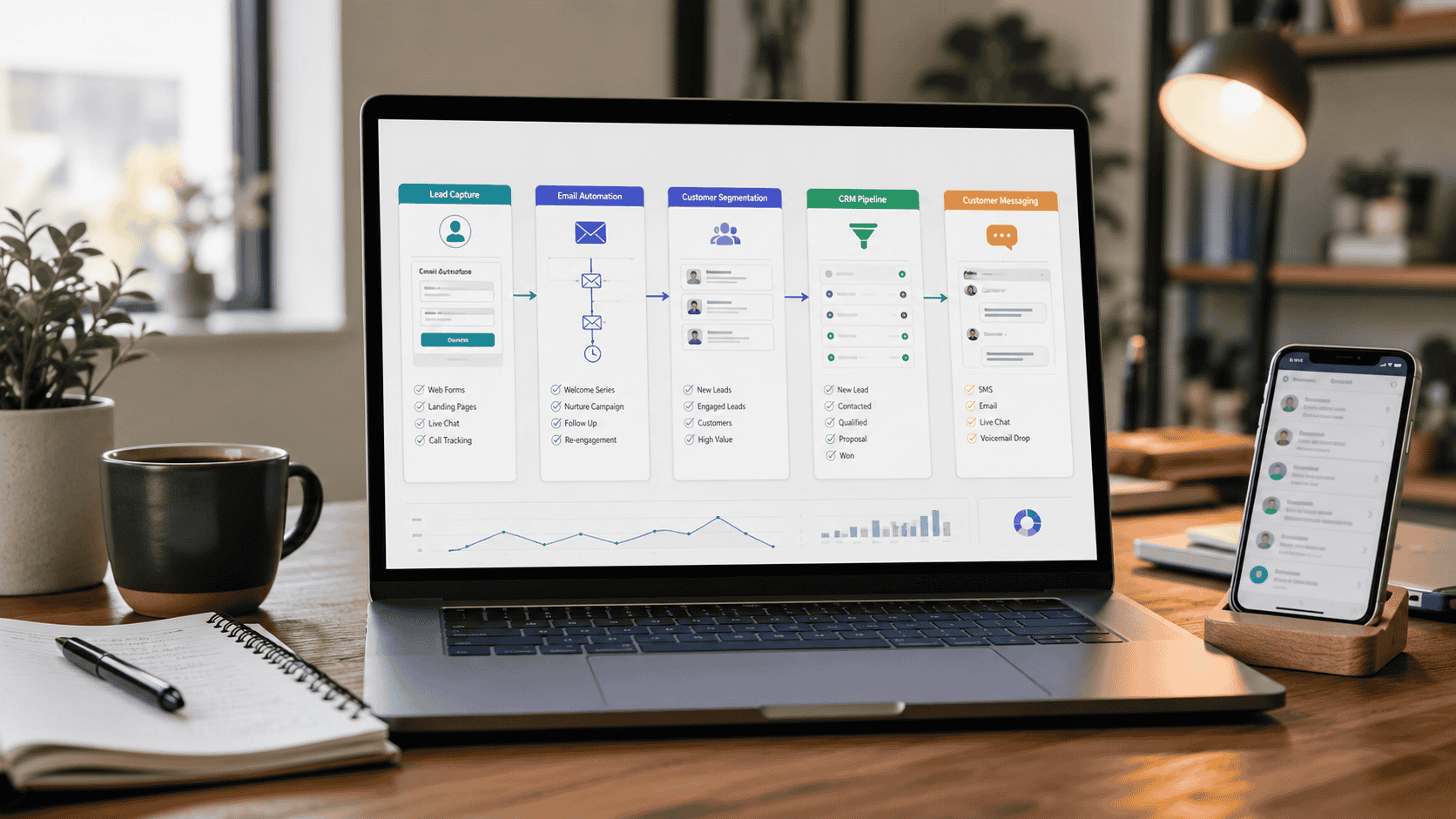
That’s Where Brevo Comes In
Brevo is more than a basic newsletter tool.
It brings several parts of the customer journey into one platform, including:
- Email marketing.
- Marketing automation.
- Customer segmentation.
- Sales CRM and pipelines.
- Lead capture forms.
- Transactional emails.
- SMS and other messaging channels.
- Live chat and customer conversations.
- Sales meetings and follow-up tools.
Instead of sending the same campaign to everyone, you can create workflows based on what customers actually do.
For example, someone visits your landing page and submits a form.
Brevo can automatically add that person to the correct contact list and send a welcome email.
If they click a link related to a specific service, they can be segmented based on that interest.
If they continue engaging but don’t purchase, they can receive educational content, testimonials, or answers to common objections.
If they request help, your sales team can continue the conversation with more context.
Once they become a customer, they can automatically leave the lead-nurturing sequence and enter a post-purchase workflow.
The system continues working even when your team is busy, offline, or focused on other tasks.

What Changes When Marketing and Sales Share the Same Customer View?
Imagine a prospect downloads a guide from your website.
In a disconnected system, marketing knows that the form was completed.
Sales may only receive a name and email address.
The salesperson begins the conversation without knowing what the prospect actually cares about.
In a more connected system, your team may be able to see:
- Which landing page generated the lead.
- Which topic or product interested them.
- Which emails they opened.
- Which links they clicked.
- Whether they returned to the website.
- Where they are in the sales process.
Sales no longer has to begin with a generic message.
Marketing no longer has to treat every contact the same way.
The conversation becomes more relevant because it is based on actual behavior.
That can improve conversion rates without relying on additional advertising pressure.
You’re not necessarily reaching more people.
You’re doing a better job of helping interested people make a decision.
Brevo May Be a Strong Fit If…
You’re Paying for Too Many Separate Tools
Perhaps you use one platform for email marketing, another for CRM, another for chat, and another for automation.
The real cost is not limited to monthly subscriptions.
You also pay through:
- Integration work.
- Data synchronization problems.
- Employee training.
- Broken workflows.
- Duplicate records.
- Missed follow-ups.
Brevo can bring multiple customer communication and sales functions into one ecosystem.
It may not replace every specialized tool for every company.
But for small and midsize businesses with a fragmented setup, it can significantly simplify the process.
You’re Running Ads but Your Conversion Rate Is Still Low
Advertising gets customers to the door.
Your follow-up system determines what happens after they leave.
Instead of depending entirely on paid retargeting, you can build communication channels that your business controls more directly.
That becomes especially valuable when ad costs rise or algorithms change.
Your contact list and first-party customer data remain assets that your business owns.
Your Team Is Small
Most small businesses do not have a dedicated email marketer, CRM manager, automation specialist, sales operations team, and customer support department.
Brevo’s visual tools can help a smaller team manage processes that might otherwise require several different employees or platforms.
You Want to Start Small Without Outgrowing the Platform Immediately
You may only need basic email campaigns and simple automation today.
Later, you may need CRM pipelines, additional users, advanced reporting, SMS, WhatsApp, or more sophisticated customer segmentation.
Brevo offers a free entry point and multiple paid tiers, allowing businesses to test the platform before expanding their setup.
Build your first campaign or automated follow-up workflow without committing to a paid plan.
What This Could Look Like in a Real Business
Consider a small ecommerce brand.
Day 1: The First Visit
A shopper sees an ad and visits the website.
They look at a product but don’t purchase.
Instead of immediately pushing another ad, the business continues providing useful information through its owned marketing channels.
Day 2: Helpful Follow-Up
The shopper receives an email related to the product category they viewed.
The message answers a common question and helps them understand whether the product is right for them.
It is not simply another “Buy Now” promotion.
Day 4: Cart Abandonment
The shopper returns and adds the product to their cart but does not complete checkout.
An automated reminder is triggered.
The email may address shipping, returns, product benefits, or another common reason shoppers hesitate.
Day 5: Purchase
The customer places the order.
They are automatically removed from the abandoned-cart workflow.
They begin receiving order confirmations, product information, and post-purchase support instead.
Day 20: Relevant Cross-Sell
Based on the original purchase, the customer receives a recommendation for a complementary product.
The recommendation is connected to what they already bought rather than being a random storewide promotion.
Day 45: Re-Engagement
If the customer has not returned, the system can trigger a re-engagement campaign.
Each step has a purpose.
The customer does not receive unnecessary messages.
They do not continue seeing promotions for a product they already purchased.
Your employees do not need to monitor every individual contact manually.
This is how a business can generate more value from its existing traffic before spending more money to acquire additional visitors.
Brevo Isn’t the Perfect Choice for Every Business
No platform is.
Some advanced Brevo features are only available on higher-tier plans.
Its landing page builder may not be as flexible as a dedicated landing page platform.
Large companies with highly customized enterprise systems may require more complex implementations.
Businesses with advanced CRM requirements should also compare Brevo carefully with specialized sales platforms.
The right question is not:
Is Brevo the most powerful platform in every category?
A more useful question is:
Can Brevo help your business follow up more consistently, reduce the number of disconnected tools, and generate more revenue from your existing contacts?
For many small and midsize businesses, that is the comparison that matters most.
You Don’t Have to Automate Everything at Once
You do not need 30 complicated workflows on your first day.
Start with the point where your business is losing the most opportunities.
That might be:
- A welcome sequence for new subscribers.
- An abandoned-cart reminder.
- A follow-up sequence after someone requests a quote.
- Appointment reminders.
- Post-purchase education.
- A campaign for inactive customers.
One effective workflow can be more valuable than a dozen campaigns that are inconsistent or poorly targeted.
Once the workflow is running, you can improve it over time.
Test different subject lines.
Adjust the timing.
Change the message.
Create more specific customer segments.
Add another channel when it makes sense.
Marketing automation is not about setting something up once and ignoring it forever.
It gives your business a repeatable system that can be tested and improved.
Before You Increase Your Ad Budget, Fix What Happens After the Click
Sending more traffic into a weak follow-up process only creates more missed opportunities.
You can continue paying to find new prospects.
Or you can improve the way your business communicates with people who have already shown interest.
Brevo combines email marketing, automation, CRM, sales tools, and customer communication in one platform.
That can help your business:
- Respond to leads faster.
- Send more relevant messages.
- Reduce repetitive manual work.
- Prevent sales opportunities from being forgotten.
- Improve post-purchase communication.
- Build stronger customer relationships.
- Generate more value from your current marketing budget.
You may not need thousands of additional website visitors.
You may simply need a better way to continue the conversation with the visitors you already have.
Build Your Follow-Up System With Brevo
Try Brevo for free and see whether it fits your marketing and sales process.
Frequently Asked Questions
Is Brevo only an email marketing platform?
No. Email marketing is an important part of Brevo, but the platform also includes marketing automation, customer segmentation, CRM tools, sales pipelines, forms, transactional messaging, live chat, and other customer communication features.
Is marketing automation necessary for a small business?
It can be especially valuable for a small team.
Simple automation—such as welcome emails, quote follow-ups, appointment reminders, or post-purchase messages—can prevent leads from being forgotten without requiring an employee to handle every step manually.
I already have an email marketing tool. Should I switch?
That depends on your current setup.
If your email platform works well and connects smoothly with your sales and customer data, switching may not be necessary.
Brevo becomes more attractive when your current tools are disconnected or when you want email, automation, CRM, and customer communication inside one ecosystem.
Do I need coding skills to use Brevo?
Many campaigns, segments, and workflows can be created using visual tools.
Brevo also provides technical integration options for businesses that need to connect the platform with a website, ecommerce store, application, or custom system.
Can I try Brevo before paying?
Brevo offers a free plan that allows businesses to explore its basic features before upgrading. Limits and included features vary by plan, so review the current pricing details before choosing a subscription.
Can Brevo completely replace my current CRM?
For many small and midsize businesses, Brevo’s CRM and pipeline tools may cover common sales management needs.
Companies with complex enterprise CRM processes, extensive custom objects, or highly specialized sales requirements should evaluate the platform carefully before migrating.
Final Thought
How much have you already spent bringing people to your website?
And how many of those people disappeared simply because your business did not follow up at the right time?
Before launching another campaign, consider building a system that helps you take better care of the leads you already paid to acquire.
No credit card required. Explore Brevo and build your first customer follow-up workflow.
This article is for general educational purposes only. Email marketing, CRM, automation features, pricing and integrations can change over time. Always review current product details, plan limits and terms before choosing a platform for your business.