
This article may contain affiliate links. If you purchase through our links, we may earn a commission at no extra cost to you. The ActiveCampaign link in this version uses the official website URL temporarily and can be replaced with an affiliate link later.
- Many businesses waste ad budget by paying for clicks without building a clear follow-up system after the first visit.
- Remarketing ads can help, but relying only on retargeting can increase spend and make the brand feel repetitive or annoying.
- Email automation, abandoned cart flows, welcome sequences and lead nurturing can keep interested visitors moving after the click.
- A follow-up automation platform such as ActiveCampaign can help businesses segment contacts, send behavior-based messages and reduce funnel leakage.
- Before increasing ad budget, check whether the post-click system is strong enough to bring warm prospects back when they are ready to buy.
Most businesses waste their ad budget because they don’t do this.
They pay to get the click.
Then they let the customer disappear.
It happens every day. A small business owner launches Facebook Ads. A shopper clicks from Instagram. A lead visits the landing page. Someone watches a product video. Someone adds a product to cart. Someone downloads a guide. Someone signs up for a discount code.
Then life gets in the way.
The shopper opens another tab. The parent gets interrupted by a child. The office worker goes back to Slack. The student saves the page and forgets. The buyer compares three other brands. The lead tells themselves they will come back later.
Most people do not buy the first time they click.
That does not mean they are not interested. It means they are human.
And this is where many businesses lose money.
They spend all their energy trying to get more traffic, more clicks, more reach, more impressions and more new visitors. But they do not build a system for what happens after someone shows interest.
So the paid traffic leaks out of the funnel.
The business responds by spending more on ads.
More budget. More creatives. More targeting tests. More campaigns. More retargeting.
But the real problem is not always at the top of the funnel.
Sometimes the real problem starts after the click.
The Real Problem Starts After the Click
Most advertisers watch the obvious numbers.
CPM. CPC. CTR. ROAS. Cost per lead. Cost per purchase. Add-to-cart rate.
Those numbers matter.
But there is a question that matters just as much:
What happens after someone clicks?
A click is not a customer. A landing page visit is not a sale. An email signup is not revenue. An abandoned cart is not a completed order.
A click is only a signal of attention.
The visitor may need more time. They may need proof. They may need a reminder. They may need to understand the product better. They may need to see reviews. They may need a comparison. They may need to feel that the brand is real.
That is especially true in the United States, where consumers are used to comparison shopping, reading reviews, checking shipping policies, looking for discount codes and bouncing between multiple brands before buying.
Paid ads are good at creating the first touch.
They are not always enough to finish the relationship.
The first click is not the end of the customer journey. In many cases, it is only the beginning.
The Warmest Audience Is Often the One Businesses Ignore
Many businesses are obsessed with finding new people.
New audiences. New interests. New lookalikes. New creatives. New campaigns. New placements. New hooks.
That work is important. Growth usually needs new demand.
But while chasing new people, many businesses forget the people who already raised their hand.
These are not cold strangers anymore.
They watched the video. They clicked the ad. They visited the landing page. They viewed a product. They added something to cart. They signed up for a discount. They downloaded a guide. They booked a call but did not show. They purchased once and never heard from the brand again.
This is the warmest audience in the business.
And it is often the most ignored.
That is strange when you think about it.
A business will spend money to find a new stranger, but fail to follow up with someone who already showed interest.
That is where ad budget gets wasted quietly.
Not because the ad failed to get attention.
Because the business had no system to continue the conversation.
Why People Don’t Buy Right Away
Most businesses act like the customer journey is simple.
See ad. Click ad. Buy product.
Real life is not that clean.
A person might click your ad while sitting in a parked car before walking into work. They might browse your product during lunch. They might add something to cart while watching TV. They might check your pricing while waiting in line at Target. They might read half your landing page and then get pulled into a meeting.
The intent may be real.
The timing may not be.
People delay purchases for ordinary reasons:
- They need to compare options.
- They do not fully trust the brand yet.
- They are waiting for payday.
- They want to read reviews.
- They are not sure the product fits them.
- They are distracted.
- They are shopping from their phone.
- They want to ask a spouse, partner or team member.
- They are interested but not urgent.
- They are afraid of making the wrong choice.
This is why follow-up matters.
A good follow-up system does not pressure people aggressively.
It helps them continue from where they left off.
Remarketing Ads Are Useful, But They Are Not Enough
Remarketing is not wrong.
Retargeting ads can remind people about a product they viewed, a cart they abandoned or a service they considered. For many businesses, remarketing is a valuable part of the funnel.
But remarketing has limits.
When a business relies only on remarketing ads to reach interested people again, it keeps paying to talk to the same audience over and over.
The user clicked once. Then the business pays to show them another ad. Then another. Then another. Then another.
At some point, the brand starts to feel less helpful and more annoying.
This is especially true on social media.
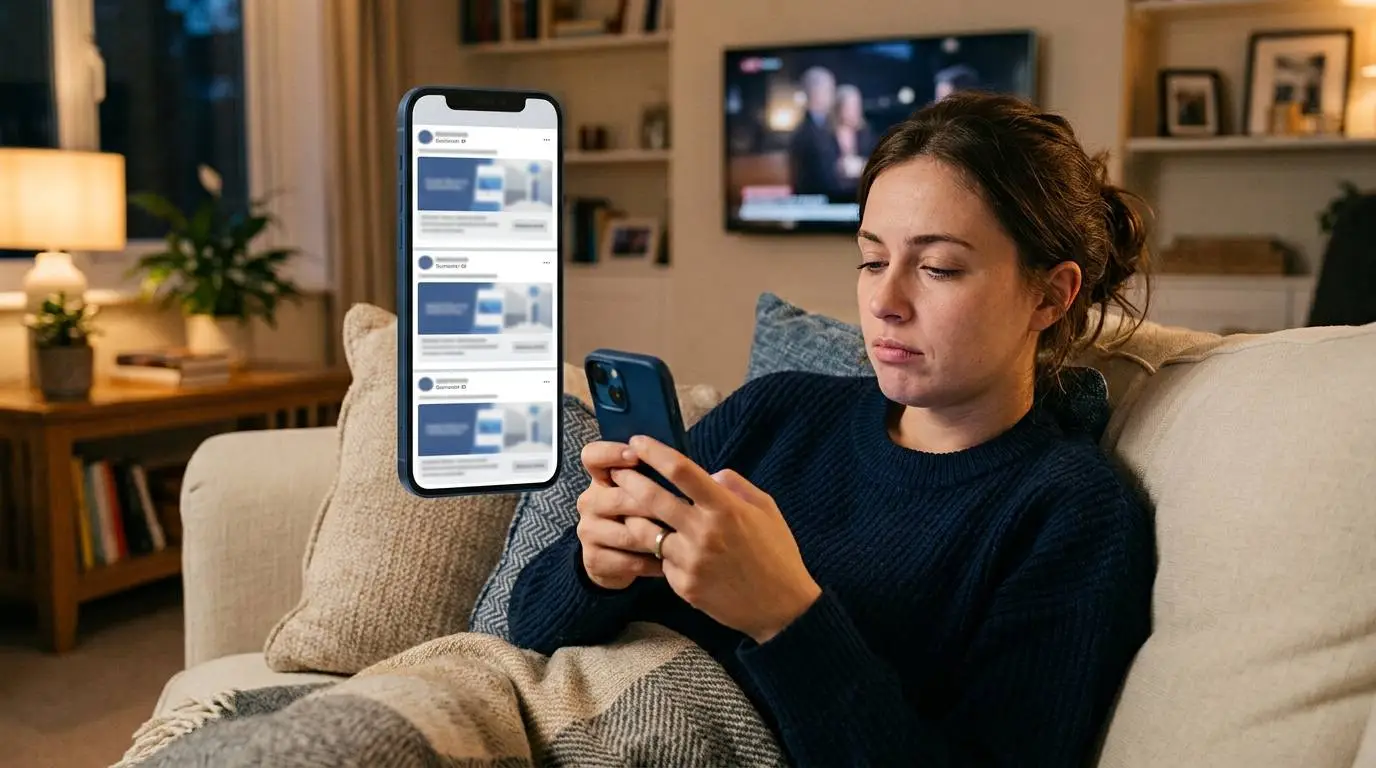
People do not open Instagram or Facebook because they want to be chased by ads all day. They open social apps to relax, scroll, connect, laugh, watch videos, check friends, follow creators or avoid work for five minutes.
If a brand keeps appearing with the same message, the customer may not feel nurtured.
They may feel followed.
That is the hidden risk.
Why keep paying to reach people again and again if they already showed interest once?
Retargeting can remind people.
But reminding is not the same as nurturing.
The Hidden Cost of Relying Only on Retargeting
The obvious cost of remarketing is ad spend.
The hidden cost is brand fatigue.
Every repeated impression has a cost. Sometimes that cost is money. Sometimes it is attention. Sometimes it is goodwill.
When a business relies only on retargeting ads, it has several problems.
First, it keeps paying for visibility it could have earned through owned channels such as email or SMS.
Second, it has less control over when the message appears. The ad may show when the person is not in a buying mindset.
Third, the message is usually short. An ad can remind someone, but it is not always the best place to explain details, educate a lead or handle objections.
Fourth, repetition can become irritating if the user keeps seeing the same product without receiving any new reason to trust it.
A retargeting ad can say:
“Come back and buy.”
A good follow-up email can say:
“Here is how this works, who it is for, what customers ask before buying and why it may or may not be right for you.”
That second message is more useful.
The goal is not to stop remarketing.
The goal is to stop treating remarketing as the entire follow-up strategy.
The Better Solution: Build a Follow-Up System
A follow-up system is what happens after someone shows interest.
It is not one email.
It is not one discount code.
It is not one “Hey, you forgot something” message.
A real follow-up system is a structured way to keep the relationship alive after the click.
It can send the right message based on what the person did.
For example:
A new subscriber gets a welcome sequence. A cart abandoner gets a reminder with product details and reviews. A lead who downloaded a guide gets educational content. A past customer gets a repeat purchase flow. An inactive customer gets a re-engagement campaign. A high-intent visitor gets proof, FAQs or a case study.
The simple version looks like this:
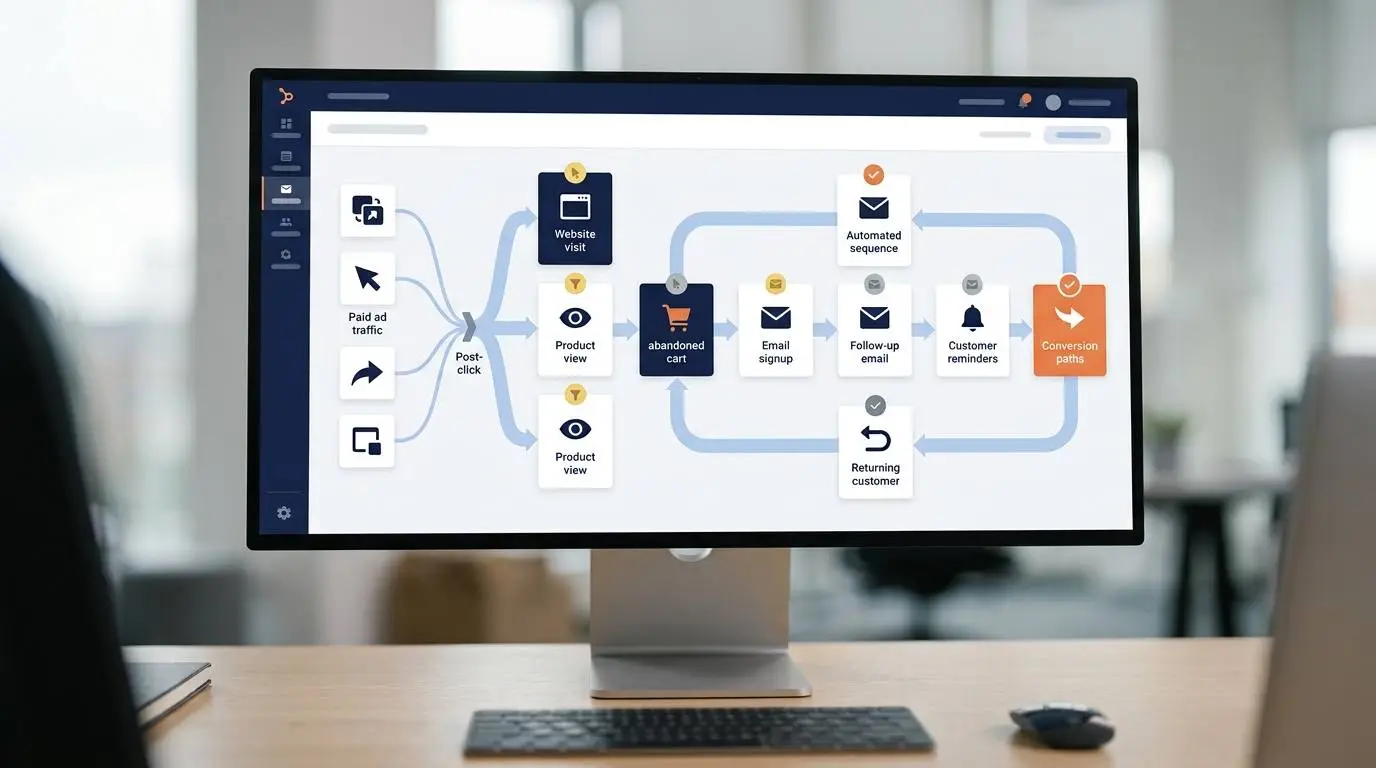
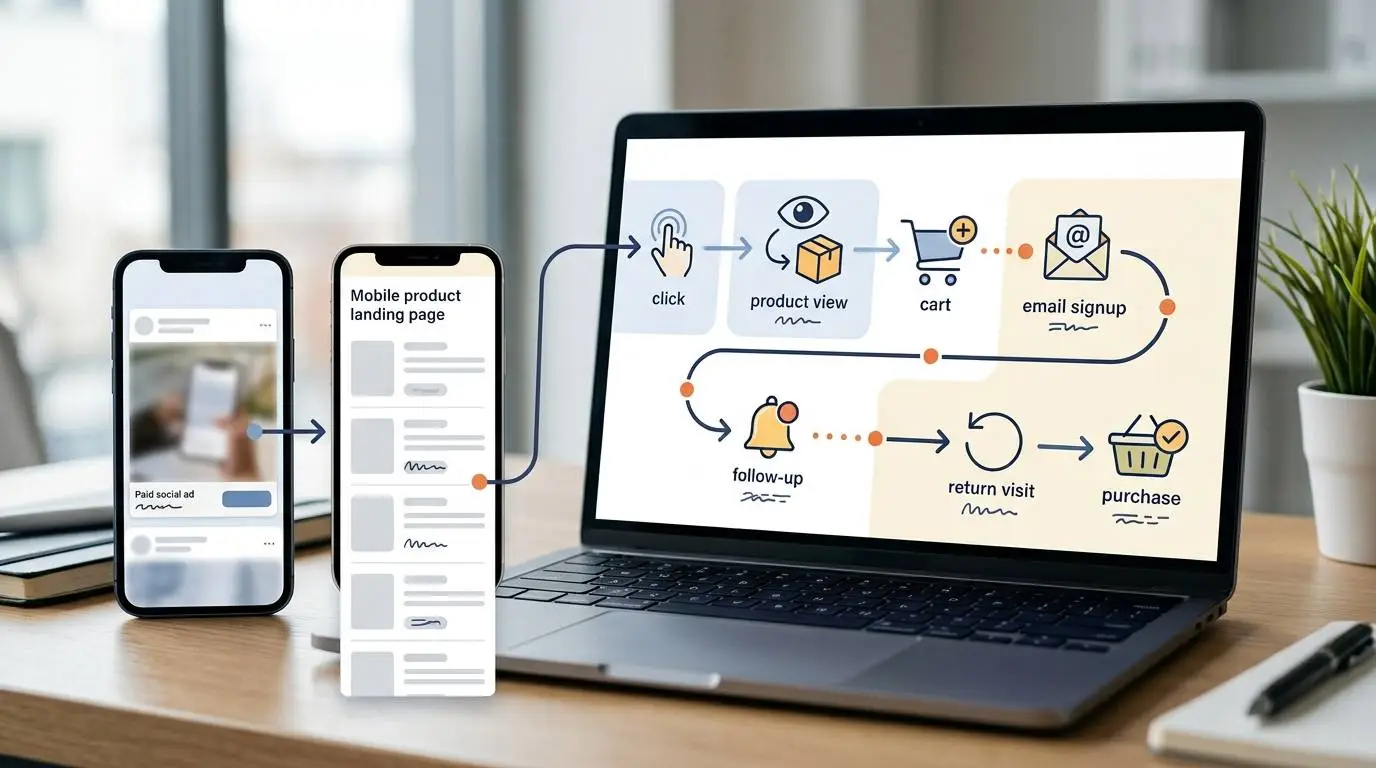
Visitor clicks ad. Visitor views product. Visitor leaves website. Business sends useful follow-up. Visitor sees proof, education or reminder. Visitor returns when ready.
That is the difference.
Ads bring people in.
A follow-up system gives them more reasons to come back.
Build automated follow-up sequences that help turn interested visitors into customers.
Why Automation Is Different From Remarketing Ads
Marketing automation and remarketing ads are not the same thing.
Both can help bring people back, but they work differently.
Remarketing ads are rented attention.
Automation is a follow-up system you control more directly.
With ads, you pay for impressions, clicks or delivery. With email automation, you can continue the conversation after someone joins your list, abandons a cart or becomes a customer.
That does not make automation free. You still pay for software, setup and list growth. But you are not paying the ad platform for every single reminder in the same way.
The difference is control.
Remarketing ads are short, public and algorithm-driven.
Automation can be timed, segmented, educational and behavior-based.
A retargeting ad might say:
“Still interested?”
An automation sequence can say:
“Here is what makes this product different.” “Here are the most common questions before buying.” “Here is how customers use it.” “Here is what to know before choosing.” “Here is a reminder about the cart you left.” “Here is a reason to come back.”
The goal is not to stop running ads.
The goal is to stop wasting the traffic your ads already paid for.
Remarketing vs. Follow-Up Automation
| Remarketing Ads | Follow-Up Automation |
|---|---|
| You keep paying to reach people again | You can continue the conversation through owned channels |
| Delivery depends on ad platform algorithms | Timing can be based on user behavior |
| Message is usually short | Message can be longer and more educational |
| Can feel repetitive if overused | Can be personalized by interest or action |
| Good for reminders | Better for nurturing and objection handling |
| Works inside social feeds | Works through email, SMS or CRM workflows |
| Often focused on immediate return | Can build trust over time |
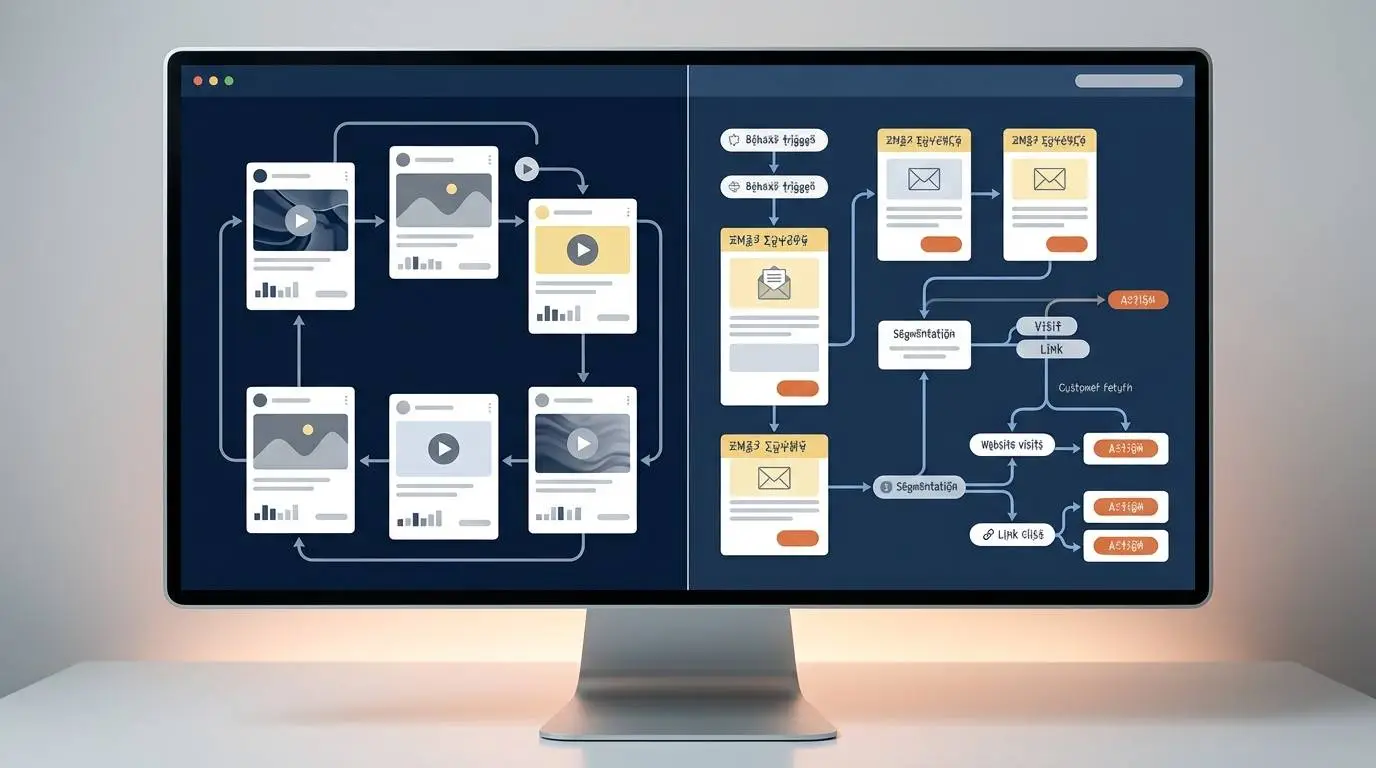
The best marketing system uses both.
Ads create attention.
Automation turns attention into a relationship.
What a Good Follow-Up System Should Include
A strong follow-up system does not need to be complicated at first.
Most businesses can start with a few core flows.
1. Welcome Sequence
This is for someone who joins your email list, downloads a guide, signs up for a discount or submits a form.
The goal is not to sell immediately in every message.
The goal is to introduce the brand and create trust.
A simple welcome sequence might include:
Email 1: Deliver the promised resource or discount. Email 2: Explain the brand’s main value. Email 3: Show customer proof or a useful example. Email 4: Answer common objections. Email 5: Invite the person to take the next step.
This is especially useful for coaches, consultants, creators, agencies, software companies and service businesses where people need more trust before buying.
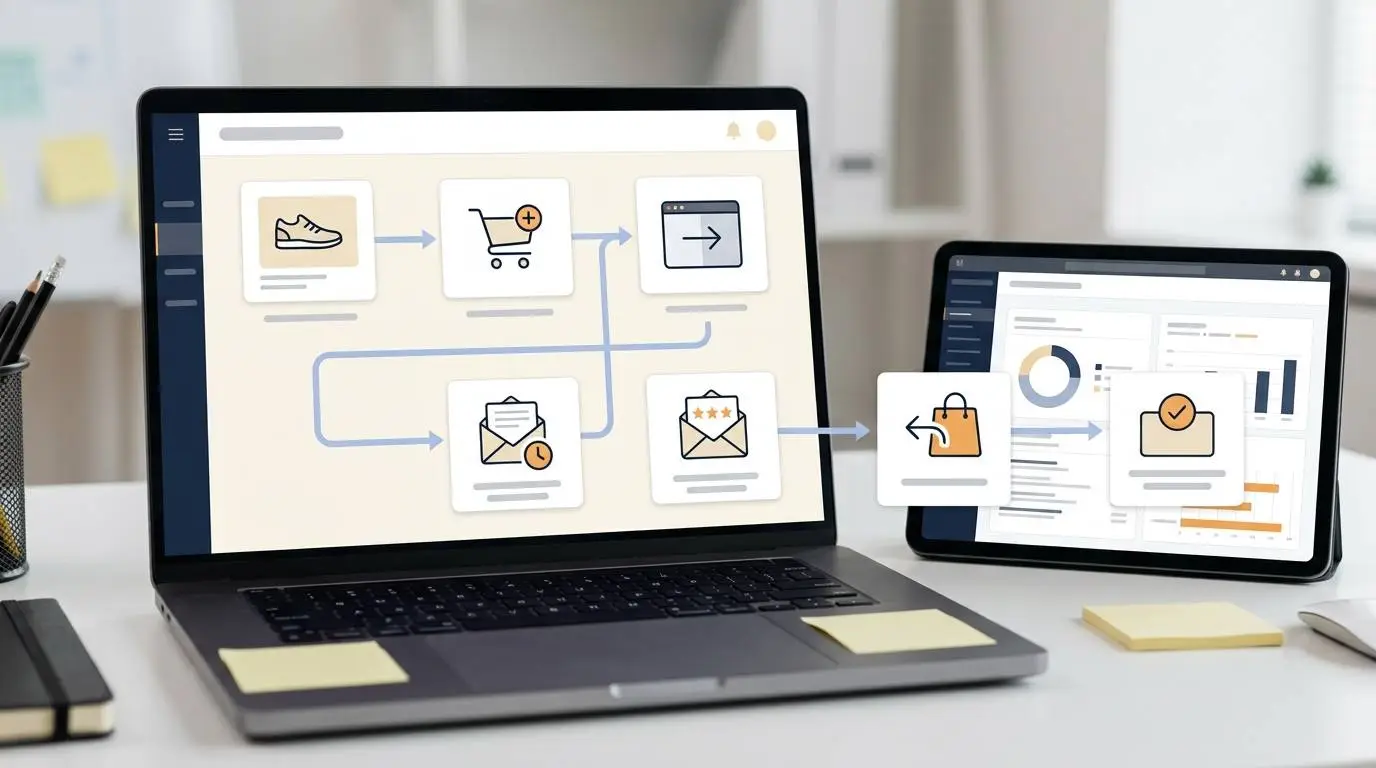
2. Abandoned Cart Flow
This is for someone who adds a product to cart but leaves before completing the purchase.
A weak abandoned cart email says:
“You left something behind.”
A better abandoned cart flow does more than remind.
It may include:
- The product they viewed
- A short reminder
- Reviews or testimonials
- Shipping and return details
- FAQ answers
- A small incentive if appropriate
- A final reminder before the offer expires
The point is not to beg.
The point is to reduce hesitation.
If someone added to cart, there was real intent. The follow-up should reopen the conversation.
3. Lead Nurturing Sequence
Not every lead is ready to buy.
Some people need education before they trust the solution.
A lead nurturing sequence can send:
- Helpful guides
- Product comparisons
- Case studies
- Customer stories
- Tutorials
- Mistakes to avoid
- Buying checklists
- Industry insights
- Proof of results
This works well for businesses selling higher-consideration products or services.
Examples include SaaS, online courses, consulting, coaching, agencies, insurance, finance-related services and B2B products.
4. Segmentation
Segmentation means treating people differently based on what they do.
A person who only clicked an ad should not receive the same follow-up as someone who added a product to cart.
A past customer should not receive the same sequence as a brand-new lead.
Useful segments may include:
- Clicked an ad
- Viewed a product
- Downloaded a guide
- Added to cart
- Purchased once
- Purchased multiple times
- Opened recent emails
- Stopped engaging
- Viewed a specific category
- Submitted a form but did not book
Segmentation makes follow-up feel more relevant.
That matters because generic automation can become just as annoying as repetitive ads.
5. Re-Engagement Campaign
Some customers go quiet.
They bought once and disappeared. They signed up and stopped opening emails. They visited the site and never came back. They showed interest months ago but never converted.
A re-engagement campaign can bring some of those people back.
It might include:
- A helpful update
- A new offer
- A product reminder
- A customer story
- A seasonal message
- A “still interested?” email
- A reason to return
This is not about bothering people forever.
It is about giving interested people a clear path back.
Where ActiveCampaign Fits
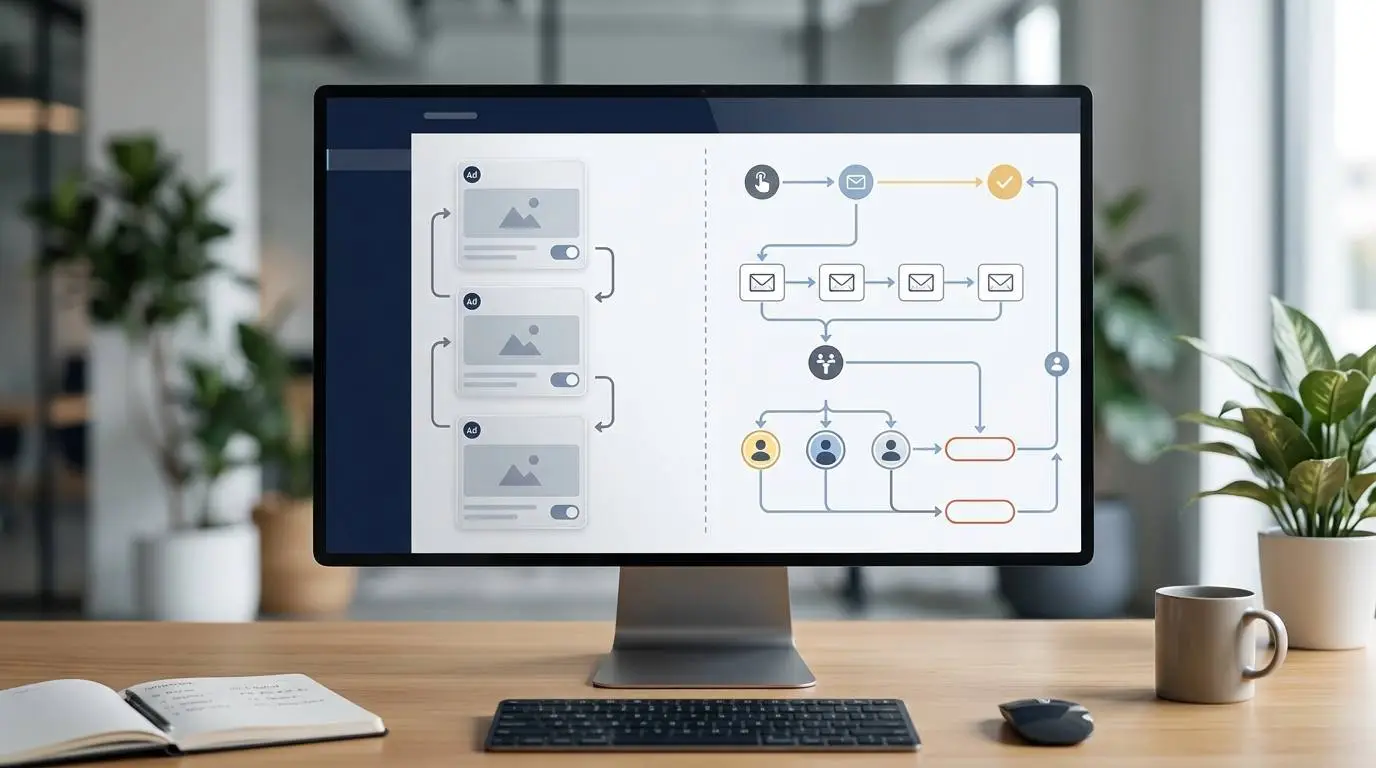
This is where a marketing automation platform like ActiveCampaign can help.
ActiveCampaign is not just an email tool. It is a system for following up with people after they interact with your business.
A business can use it to create automated email sequences, segment contacts by behavior, build abandoned cart flows, connect marketing and sales activity, manage customer relationships and send more relevant messages over time.
That makes it useful for businesses that already spend money on traffic.
If you are paying for Facebook Ads, Instagram Ads, Google Ads, TikTok Ads or influencer campaigns, the follow-up system becomes the place where that traffic is not wasted.
For example:
An ecommerce brand can follow up with cart abandoners. A coach can nurture leads who downloaded a guide. A consultant can educate prospects before a call. A course creator can send a sequence before enrollment closes. An agency can build automated lead journeys for clients. A small business can make sure no interested contact gets forgotten.
The point is not that every business needs the most advanced automation on day one.
The point is that every paid traffic strategy needs a plan after the click.
Who Should Consider a Follow-Up Automation Tool?
A follow-up automation tool is most useful when a business already has some kind of interest coming in.
You do not need a huge audience.
But you do need people entering the funnel.
Ecommerce Brands
Ecommerce brands should consider automation if they have:
- Paid traffic
- Product page visitors
- Abandoned carts
- Repeat purchase potential
- Seasonal offers
- Customer segments
- Reviews or product education to share
The biggest opportunity is often not getting more traffic.
It is converting more of the people who already showed buying intent.
Coaches, Consultants and Course Creators
Service-based businesses often lose leads because follow-up is inconsistent.
A person downloads a guide, attends a webinar or clicks a lead ad, but nobody nurtures them afterward.
Automation can help send:
- Welcome emails
- Educational content
- Proof of expertise
- Case studies
- Objection-handling emails
- Booking reminders
- Enrollment reminders
This is important because trust-based services are rarely sold in one click.
Agencies and Marketers
Agencies can use follow-up automation to improve client funnels.
Instead of reporting only clicks and leads, they can help clients build systems that turn leads into revenue.
That is a stronger value proposition.
A good agency does not only ask:
“How many leads did we get?”
It also asks:
“What happened to those leads after they arrived?”
Small Businesses
Many small businesses do not have a full sales team.
That means leads can easily slip through the cracks.
A follow-up system helps make sure interested people receive consistent communication even when the owner is busy running the business.
This is useful for local services, ecommerce shops, fitness studios, clinics, online educators, consultants and small B2B companies.
What to Fix Before Increasing Ad Budget
Before increasing your ad budget, look at your post-click system.
Ask:
- What happens after someone clicks an ad?
- Do we capture email or contact information?
- Do cart abandoners receive a useful reminder?
- Do leads get a welcome sequence?
- Do we segment based on behavior?
- Do past customers receive follow-up?
- Do we educate people who are not ready to buy?
- Do we rely only on retargeting ads to bring people back?
- Do we know which follow-up messages drive revenue?
If the answer is unclear, spending more on ads may simply create more leakage.
More traffic does not fix a broken follow-up system.
It exposes it.
A Simple Follow-Up System for Paid Traffic
A basic system can start with four flows.
Flow 1: New Lead Welcome
Trigger: Someone submits a form or joins the list.
Goal: Introduce the brand and explain the value.
Flow 2: Abandoned Cart
Trigger: Someone adds to cart but does not buy.
Goal: Remind, reduce hesitation and bring them back.
Flow 3: Product Education
Trigger: Someone views a product or clicks a category.
Goal: Explain benefits, proof, use cases and FAQs.
Flow 4: Re-Engagement
Trigger: Someone has not opened, clicked or purchased for a while.
Goal: Restart the relationship with a useful reason to return.
This is not complicated.
But many businesses do not have even this basic structure.
That is why so much paid traffic gets wasted.
The Final Takeaway
Most businesses do not need to spend more on ads right away.
They need to build a better system for the traffic they already paid for.
Before increasing your budget, look after the click.
If people are clicking but not buying, do not only ask whether the creative is good.
Ask whether the follow-up is strong enough.
Remarketing ads can help. But they are only one piece of the system.
A better follow-up process can educate, remind, segment, nurture and bring people back when they are closer to buying.
Ads bring people in.
Follow-up brings them back.
Use ActiveCampaign to create email automation, abandoned cart reminders and customer nurturing flows.
This article is for general educational purposes only. Marketing automation tools, pricing, features and integrations can change over time. Always review current product details and terms before choosing a platform for your business.