
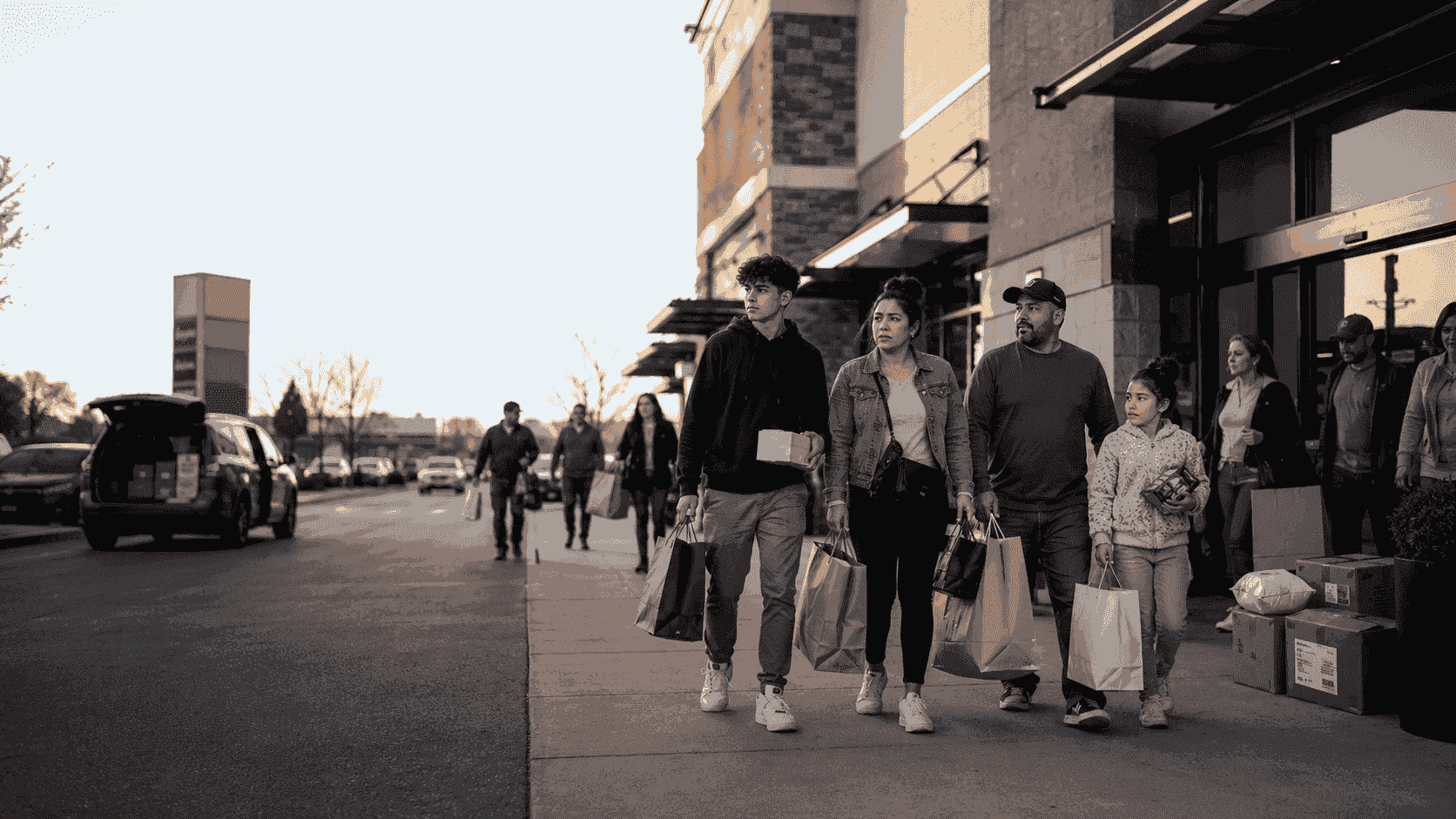
- U.S. retail and food-service sales increased 0.9% in May from the previous month.
- Sales reached an estimated $763.7 billion, up 6.9% from a year earlier.
- Online shopping, vehicle purchases, furniture and gasoline helped drive the increase.
- Because the figures are not adjusted for inflation, part of the growth reflects higher prices rather than consumers buying more products.
- Strong spending may support economic growth, but inflation, credit costs and falling savings could make that momentum difficult to sustain.
American consumers delivered another surprisingly strong month for retailers.
U.S. retail and food-service sales reached an estimated $763.7 billion in May, increasing 0.9% from April and 6.9% from the same month last year, according to the U.S. Census Bureau.
The monthly gain exceeded many economists’ expectations and followed a revised 0.4% increase in April. It was the latest indication that consumer demand—one of the main engines of the U.S. economy—has remained resilient despite higher living costs and economic uncertainty.
However, the report also requires some caution.
Retail sales are measured in dollars and are not adjusted for inflation. That means consumers may be spending more partly because products, gasoline and other essentials cost more, not necessarily because households are purchasing significantly more goods.
Because the headline figures are reported in current dollars, they should not be interpreted as a direct measure of how many additional goods consumers purchased.
Where Americans spent more money
The increase was spread across several parts of the retail economy.
Sales at motor vehicle dealerships rose 1.2% in May. Online and other nonstore retail sales increased 1.5%, continuing the long-term shift toward e-commerce.
Furniture-store sales also grew 1%, while clothing, health and personal-care products, sporting goods and hobby-related purchases recorded gains.
Gas stations experienced one of the largest increases, with receipts rising 3.4%. But this category demonstrates why the report should not be interpreted as a pure measure of consumer confidence.
When gasoline prices rise, Americans may spend more at the pump even if they drive the same amount—or less. Higher gas-station revenue can therefore lift total retail sales while leaving households with less money for other purchases.
There were also signs that consumers were becoming more selective.
Restaurant and bar spending slipped 0.1%, while electronics and appliance-store sales declined 0.5%. Sales at food and beverage stores were largely unchanged.
These weaker categories may suggest that some households are prioritizing essential purchases and delaying discretionary spending.
The consumer economy looks strong—but uneven
The retail report shows that Americans, as a group, are still spending. It does not show that every household is experiencing the economy in the same way.
Higher-income consumers have received support from employment income, tax refunds and financial-market gains. Households that own significant investments may feel more comfortable purchasing vehicles, furniture and other expensive products when the value of their portfolios rises.
Lower- and middle-income households face a different reality.
Food, housing, transportation, insurance and borrowing costs continue to consume a large share of monthly income. Families with limited savings are more exposed to increases in gasoline and grocery prices and may depend more heavily on credit cards to manage routine expenses.
This helps explain an apparent contradiction in the economy: retail spending can remain strong even while many Americans report feeling worried about their personal finances.
National spending figures combine millions of households with very different incomes, debts, savings and expenses. Strong purchases by affluent consumers can offset cutbacks among financially stressed households, making the overall economy look healthier than the experience of the typical family.
The most important number was not the headline number
Economists closely watch a narrower measure commonly known as the retail “control group.”
This measure excludes vehicle dealerships, gas stations, building-material suppliers and restaurants because those categories can be volatile or are treated differently in government economic calculations.
Control-group sales increased 0.7% in May.
That gain suggests the report was not driven entirely by higher gasoline prices. Underlying purchases remained relatively healthy across several categories, supporting expectations that consumer spending could contribute positively to economic growth during the second quarter.
Still, one strong month does not guarantee that the pace will continue.
Some of the recent spending strength may have been supported by larger tax refunds. Once that temporary cash is used, households must rely more heavily on wages, savings or credit.
If prices continue rising faster than paychecks, consumers may eventually reduce discretionary purchases.
What strong retail sales could mean for interest rates
The retail report also matters beyond shopping malls and online stores.
When consumers continue spending aggressively, businesses may find it easier to raise prices. Persistent demand can make inflation more difficult to control and reduce the urgency for the Federal Reserve to lower interest rates.
That affects several areas of household finance, including:
- Credit-card interest rates
- Auto loans
- Mortgage rates
- Small-business borrowing
- High-yield savings accounts
- Stock and bond valuations
Strong consumer demand is generally positive for economic growth and corporate revenue. But if that strength contributes to inflation pressure, Americans could face higher borrowing costs for longer.
In other words, the same data that appears encouraging for retailers may not be welcome news for households waiting for cheaper mortgages or lower credit-card rates.
Retail sales do not capture the entire consumer economy
The report also has an important limitation: it focuses primarily on goods.
It does not fully capture major service categories such as hotels, air travel, health care, housing and many forms of entertainment. Restaurants are the main service category included.
Americans have increasingly shifted spending toward services over the past several years, so retail sales provide only one part of the broader consumer picture.
To understand whether households are truly becoming more financially secure, the retail report should be considered alongside inflation, wage growth, employment, consumer credit, household savings and service spending.
What to watch next
The next several months will show whether May’s spending increase represents lasting strength or a temporary boost.
The most important signals will include:
- Gasoline and food prices: Higher essential costs leave less money available for optional purchases.
- Wage growth: Consumer spending is more sustainable when income rises at least as quickly as prices.
- Credit-card balances and delinquencies: Growing dependence on debt could signal that some households are spending beyond their available cash.
- Employment: A stable labor market gives consumers confidence to continue making purchases.
- Online and discretionary sales: Furniture, electronics, clothing and restaurant spending can reveal whether households are feeling secure or becoming more cautious.
- Federal Reserve policy: Stronger economic data may keep borrowing costs elevated.
The bottom line
May’s retail sales report shows that the American consumer has not disappeared.
Households continued buying vehicles, furniture, clothing and products online, helping retail sales outperform expectations. The underlying data also suggests that spending strength extended beyond gasoline.
But the headline increase should not be mistaken for proof that household finances are universally strong.
Higher prices inflated part of the total, financial conditions remain uneven and some consumers are likely spending from a much weaker position than others.
The U.S. consumer economy remains resilient—but resilience and financial comfort are not the same thing.